

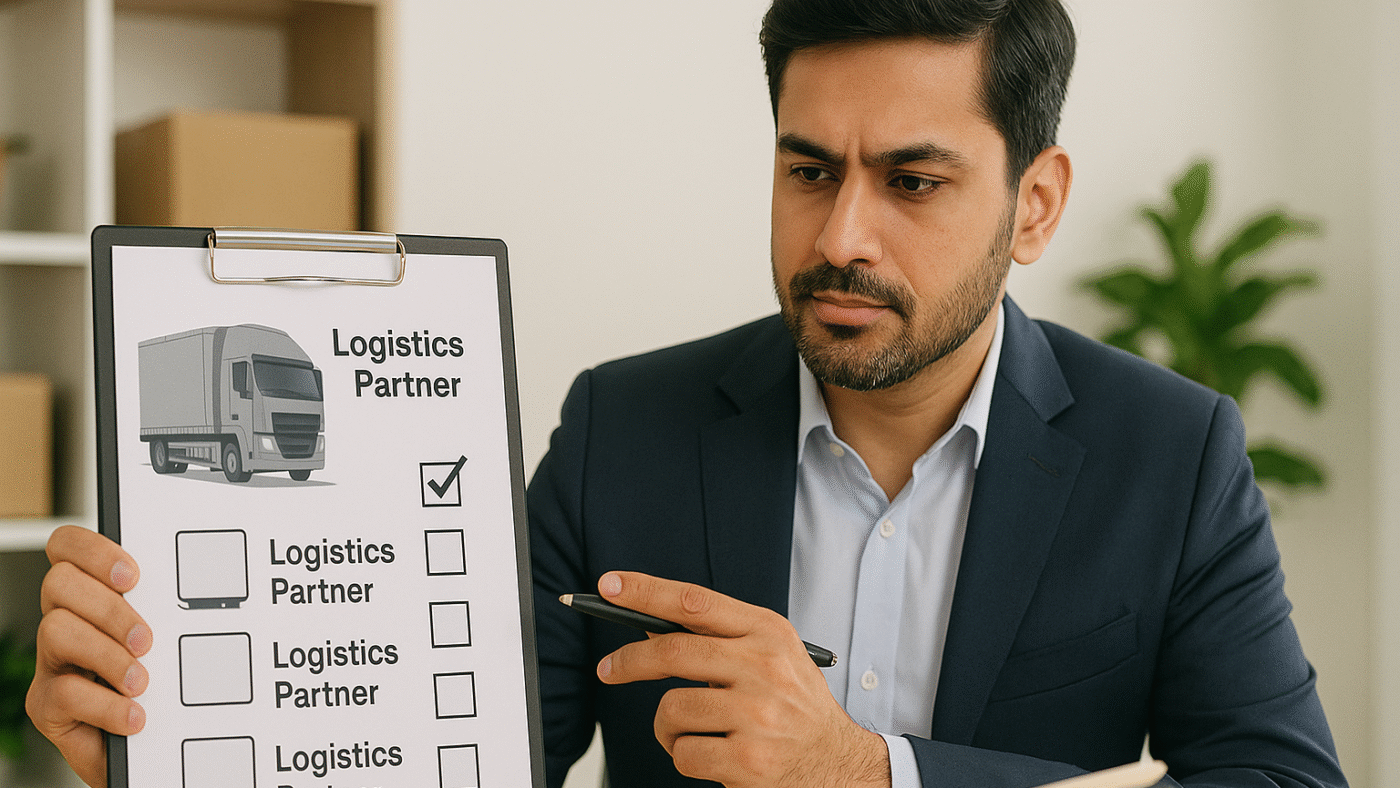
In a country as vast and diverse as India, logistics isn’t just a back-end function—it’s the lifeline of business. From the bustling lanes of Mumbai to the remote corners of the Northeast, businesses are constantly challenged to move goods efficiently, economically, and reliably. Whether you’re a thriving e-commerce startup, a traditional manufacturer, or a growing D2C brand, your choice of logistics partner can determine how seamlessly your products reach your customers.
India’s logistics sector is undergoing a transformation, thanks to rapid digitization, government reforms, and growing demand across sectors. But with an overwhelming number of service providers, selecting the right logistics partner is not just about price—it’s about alignment, reliability, and long-term value.
Here’s a concise yet comprehensive guide to help Indian businesses choose the right logistics partner.
1. Start With Self-Assessment: Define Your Logistics Needs
Before you start evaluating providers, get clarity on your own operations:
- Are your deliveries local, regional, pan-India, or cross-border?
- Do you need first-mile pickup, last-mile delivery, or both?
- Are your products bulky, perishable, fragile, or high-value?
- Do you operate in B2B, B2C, or D2C channels?
For instance, a textile exporter from Surat may require warehousing near ports, while a D2C brand in Bengaluru may need efficient last-mile delivery with COD and reverse logistics.
2. Pin Code Reach: Go Beyond Metro-Centric Logistics
India is not a metro-only market anymore. Tier 2 and Tier 3 cities, and even rural pockets, are becoming strong consumption hubs. Your logistics partner must have:
- Wide pin code coverage (including remote and non-metro regions)
- Proven delivery capabilities in your target zones
- Localized hubs or partner networks to reduce delivery lag
Companies like Delhivery, XpressBees, Ekart, and India Post offer extensive reach, but performance can vary regionally—so always check their track record in your key markets.
3. Technology Integration: The Backbone of Modern Logistics
In India’s competitive market, real-time visibility and data accuracy are non-negotiable. A reliable logistics partner should offer:
- Real-time tracking for you and your customers
- API integration with your order management or e-commerce platforms
- Dashboards with shipment status, NDR (non-delivery reports), and RTO trends
- Auto-updates via WhatsApp, SMS, or email
Providers like Shiprocket, iThink Logistics, and NimbusPost excel at enabling such integrations, especially for SMEs and online sellers.
4. Payment Flexibility and COD Management
Cash on Delivery (COD) remains a dominant payment method, especially in smaller towns. Your logistics partner must be adept at:
- Handling COD orders with proper security and proof of delivery
- Offering timely remittance cycles (preferably within 3–7 days)
- Accurate reconciliation and easy-to-access financial reports
Poor COD handling can lead to cash flow issues and customer dissatisfaction—make it a priority area during vendor evaluation.
5. Return Management and RTO Handling
In India, Return to Origin (RTO) rates can be as high as 30% in certain categories. Efficient reverse logistics is vital. Look for partners who:
- Have clear RTO policies and track return reasons
- Offer reverse pickups and automated updates
- Help minimize RTOs through address verification and delivery confirmation mechanisms
Reducing RTO not only saves money but also enhances your bottom line and inventory planning.
6. Scalability and Seasonal Readiness
India’s business cycles are heavily influenced by festivals, sales, and agricultural seasons. Your logistics partner should:
- Be able to scale operations during peak periods (Diwali, wedding season, end-of-season sales)
- Offer temporary warehousing or added delivery capacity
- Handle sudden spikes in volume without compromising on service quality
Scalability is especially important for consumer brands that rely on campaign-based sales models.
7. Transparent Pricing and Flexible Models
Logistics pricing in India can be complex, with hidden charges like fuel surcharge, holiday delivery fees, and volumetric weight adjustments. Choose a partner who offers:
- Transparent pricing slabs
- Clear breakdowns of all applicable charges
- Negotiated rates for high-volume shipping or long-term contracts
Using a logistics aggregator can help compare pricing and choose the most efficient carrier per shipment.
8. Customer Support and Relationship Management
In the Indian market, where delivery delays or failed attempts are common, responsive customer support is a game-changer. Your ideal logistics partner should offer:
- A dedicated account manager
- Regional language support (Hindi, Tamil, Bengali, etc.)
- Fast escalation processes for undelivered or lost packages
Strong post-sales support helps preserve your brand reputation and customer trust.
9. Regulatory Compliance and Sustainability
With the rollout of e-way bills, GST, and increasing focus on ESG (Environmental, Social, Governance), your logistics partner must:
- Be GST-compliant with clear documentation
- Ensure compliance with local transportation norms
- Offer sustainable solutions like electric vehicle (EV) deliveries, minimal packaging, and route optimization
Companies like Bluedart and Ecom Express are making strides in green logistics—this can align well with your CSR goals.
Final Thoughts
In India’s dynamic and diverse business landscape, the logistics partner you choose is not just a vendor—they’re a strategic ally. They impact your cost efficiency, delivery timelines, customer experience, and even your brand reputation.
Choose a partner who understands the Indian terrain—literally and figuratively. Focus on reliability, adaptability, and shared growth. Because in logistics, as in business, the journey matters as much as the destination.
Need help shortlisting reliable logistics providers in India tailored to your sector and scale? Get in touch with our logistics consultants today.